Friday, 13 January 2012

GeekTool

These are some Desktop Arrangements I made using the free app for Mac GeekTool.


Wednesday, 11 January 2012

First Flying Carpet


A small magic carpet made of plastic has "taken flight" in Princeton University
The sheet measures 10cm (4in) and is driven by "ripple power"; this is when waves of electrical current push thin pockets of air from the front to the back of the carpet, making it fly. It moves at a speed of about 1cm/s but the design could be improved to make it go at 1m/s. The device's creator Noah Jafferis is a graduate student at Princeton. The source of thrust comes form the air trapped between the carpet and the ground which it then pumps out the back. This movement is not completely unlike the force that propels skates and rays in the water. The video is on the link:


 http://www.bbc.co.uk/news/science-environment-1510623

Friday, 9 December 2011

Google Sketchup

Google SketchUp is a free application by Google that enables you design anything from "coffee pots to skyscrapers".

It not only enables professionals to design plans for buildings but is also quite fun to play around with as it is incredibly simple to use but can be very specific and create very complicated things.

You can draw anything with lines and shapes with when joined up automatically turn into a 3D shape, choose different wallpapers or textures in order to create a design of something.

You can also transport this design into Google Earth which means you can picture what a piece of furniture would look like in your garden or whether an office building you designed would look nice next to the gherkin.

Google have also created the 3D Warehouse which lets you download models from other users like the Eiffel tower or a Lamborghini or even an iPhone 4S and a specific IKEA desk. This also lets you transfer models from your computer to another one privately as you can choose who sees it.

Here are a few photos of a house I designed:


Thursday, 17 November 2011

Matt Edgar Post

In the post by Matt Edgar he raises some interesting points about the pace of change and the way that people are adapting to things faster than ever before. There is one point I would like to pick up on is when he says: 'How can one seriously compare 50 million households hearing radio broadcasts for the first time with 50 million men, women, children and spambots taking a couple of minutes to sign up for free accounts on Google's latest foray into social networking'. I think the message he is really trying to get across is the way that new products now a days are so much more accessible that they are just seen as the norm. Not having an account on Facebook today is almost seen as immoral. This shows the way that the world has developed in a way which means that technology is increasingly integrated into our lives and it is increasingly easier for us to have access to all the latest technology.

What Matt Edgar is saying is that today we live in a very different society to when the radio first came out. In our society, not many new ideas are being had-for example Google+ is just a different type of Facebook or MySpace with a few changes. Therefore it is impossible to compare a radio which had never been seen before with a different type of social network. This means that people are already very familiar with new things coming out and this makes the time that people take to adapt to new products much quicker.

Monday, 3 October 2011

Moving Blog

Dear viewers, just so you know I might be updating this blog less as I will now be writing for http://tastefultechnology.blogspot.com/ check it out, it is a great blog!

History of browsers


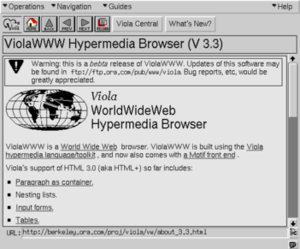
ViolaWWW, first developed in the early 1990’s for Unix computers running X and was the most commonly used browser to access the WWW or World Wide Web being recommended by CERN (European Organization for Nuclear Research). Viola was the invention of  a student at the University of California Experimental Computing Facility in Berkeley, Pei-Yuan Wei. According to James Gillies and Robert Cailliau who wrote a book on Viola WWW: "Viola was to become the first X-browser to make any impact, but even his early versions went down well at CERN...As this ViolaWWW developed, it was to set the standard for everything to follow it..."


Erwise (April 1992) was the second web browser ever made and the first to be commonly available with a graphical user interface (GUI). GUI is a type of user interface that allows users to interact with images rather than text commands. It was made by four Finnish students at the Helsinki university of technology: Kim Nyberg, Teemu Rantanen, Kati Suominen and Kari Sydänmaanlakka.Their vision was to create a more advanced, and easier and user-friendly web browser. The browser was written for Unix computers running X and used the W3 or WWW library 


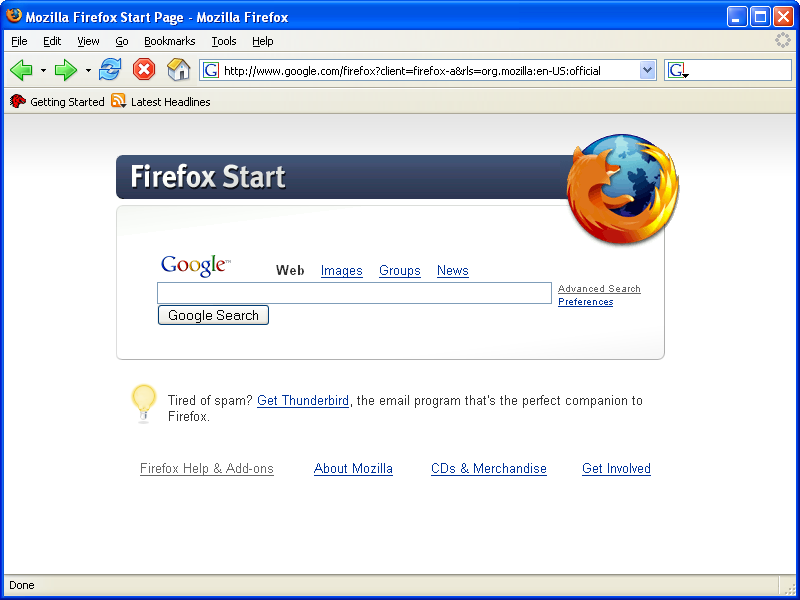
Mosaic (1993) was really the first Web browser which opened up and popularized the W3 to the public. It had a simple, understandable interface. It was also the first browser to display images online next to text instead of displaying images in a separate window. Even 18 years after Mosaic's release, the most popular browsers, Internet Explorer, Google Chrome and Mozilla Firefox, have kept many of the features of the original Mosaic graphical user interface (GUI). David Thompson first ested ViolaWWW and showed it to Marc Andreessen, who along with Eric Bina designed and programmed NCSA Mosaic (xmosaic) for Unix's X Window System.


iPhone 5? I don't think so...

A screenshot of the new iTunes beta reveals that the new iPhone will be an iPhone 4S, not an iPhone 5 as anticipated . It suggest that there will be a white and a black iPhone 4S. This info also suggests that this model, the iPhone 4S will have the same design as the current iPhone. However rumours suggest that the new iPhone will have some sort of voice recognition allowing users to accomplish a number of things such as text messaging, scheduling appointments, or looking up information.